
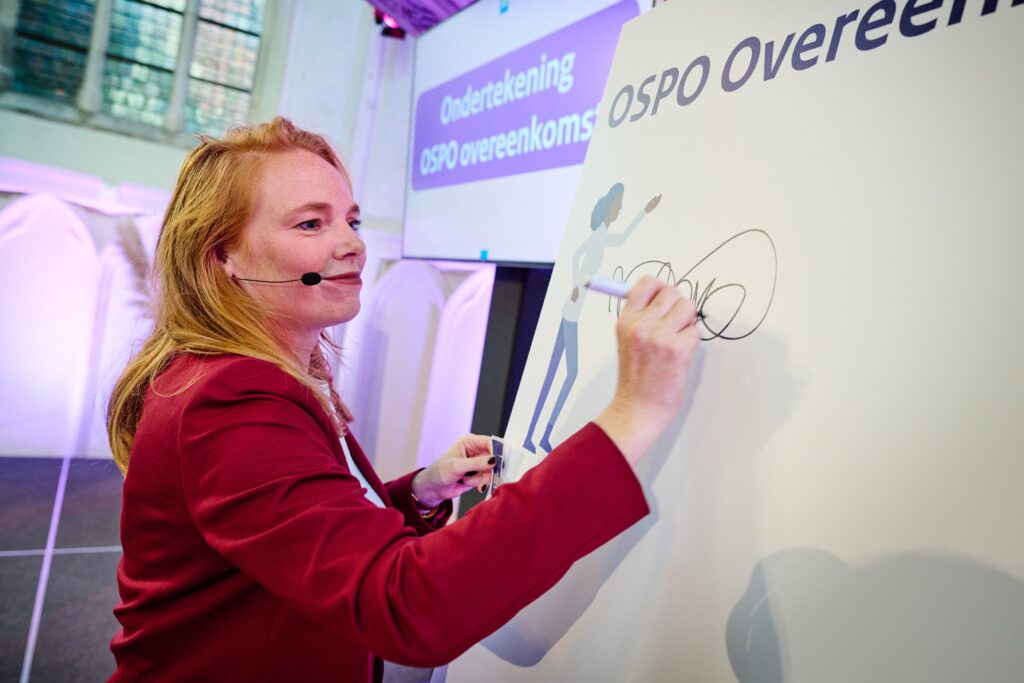
 On 1 October, during the OpenSource Leadership Summit, the national government, provinces, municipalities and SURF signed an agreement to integrate open-source practices more systematically into their operations.
Open source means the code behind digital systems is publicly available, so anyone can see how they work. This gives organisations the freedom to make custom changes, makes it easier to switch suppliers, and encourages innovation by enabling others to build on existing code.
Enhancing independence
Minister for Digital Economy and Sovereignty, Willemijn Aerdts, said: “While open source is not always the easiest or cheapest option, it allows us to design our systems exactly as we wish. This increases our independence. We can share effective solutions, innovate collaboratively, and maintain transparency over how our systems operate. I am proud that we are collectively choosing open source.”
Embedding open source in the organisation
Under the declaration of intent, governments and SURF agree to make open source a permanent part of their workflows. They plan to establish an Open Source Program Office (OSPO) within their organisations to promote open-source practices. They will also create a national network to share knowledge and experience. Other organisations are welcome to join this initiative.
Supporting resources
To aid the establishment of an OSPO, the OSPO Handbook (Dutch) has been published. This guide serves as a valuable reference for leaders, policymakers and professionals aiming to adopt open source, bridging the gap between policy and practice while highlighting necessary decisions.
Following the conference, an online magazine was also released (Dutch). It features various practical examples, procurement tips, tools and a useful calendar of upcoming events.


