
What does a policy decision mean for residents’ quality of life, health and safety? The City of Amsterdam’s Broad Well-being Scan helps policymakers understand the wider effects of their decisions. With support from the Digital Government Innovation Budget, the tool has been developed into a digital application with AI support. The City of Rotterdam is now testing the application and exploring how other municipalities could use it.
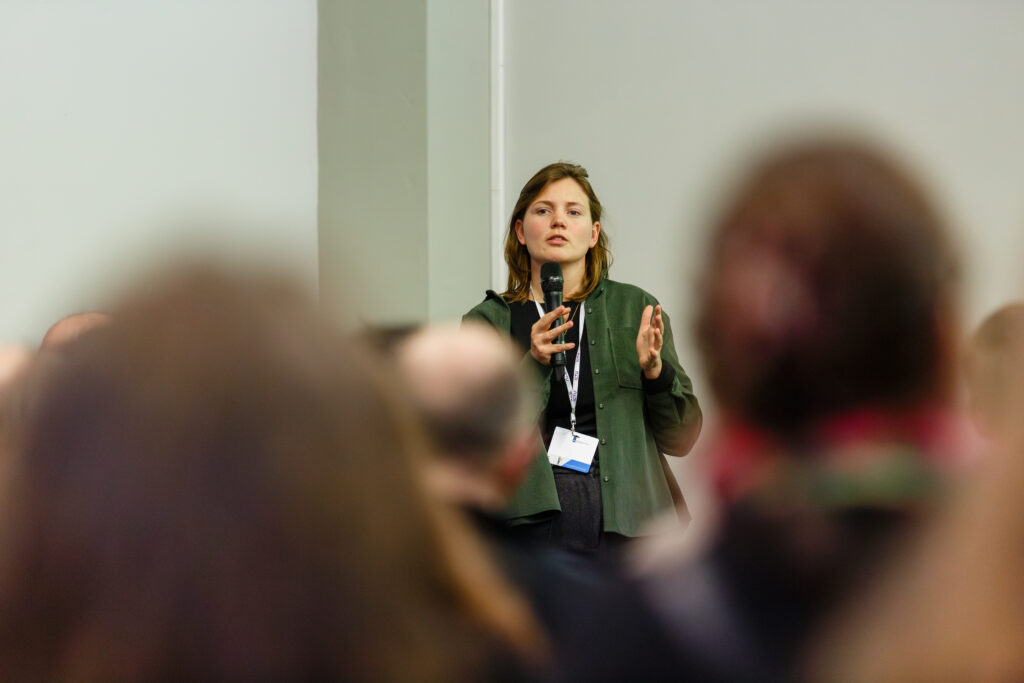
Project lead Loeki den Uyl talks about the development of the tool, the collaboration with Rotterdam and the lessons learned along the way. “Quality of life is a way of looking at the world. What matters to one person may not matter to another.”
Making connections visible
A new metro line, an increase in tourism, or measures to make a city more resilient: the effects of such developments often extend far beyond their immediate objectives. A growing visitor economy, for example, can benefit businesses, but it can also generate more waste and put pressure on the living environment. At the same time, it may improve public transport.
Amsterdam wants the Broad Well-being Scan to make these connections visible. The tool helps policymakers examine an issue from 10 different perspectives. It considers not only economic effects but also impacts on health, safety, biodiversity, and well-being, for example. Den Uyl: “This allows policymakers to better weigh up different interests and potential consequences.”
From manual tool to digital application
The Broad Well-being Scan was already in use before Amsterdam received funding from the Digital Government Innovation Budget in 2025. The municipality used a digital design tool to map the potential effects of policy decisions. “It worked, but producing a scan took time and required specialist expertise.”
With the Innovation Budget, Amsterdam wanted to take the next step: develop an online application that would let staff create scans independently and work on them together. An important part of this development was linking the application to the OpenResearch.amsterdam platform. This municipal research platform brings together policy documents, research reports and publications from universities and other higher education institutions.
Finding and using research more easily
The new application uses AI to search this information and identify insights relevant to a particular policy issue. Users can then explore its potential effects from different perspectives. “There is often a considerable gap between the publication of new research and its uptake in policymaking. This application makes it much easier to find and apply the latest research.”
According to Den Uyl, the funding from the Innovation Budget was essential to making this possible. “Without that funding, we would not have been able to establish the link with OpenResearch.amsterdam or develop the AI support. Those additional features would have taken much longer to realise, and we would not have been able to bring the different budgets together in this way.”
Amsterdam and Rotterdam working together
One notable aspect of the project is the collaboration between Amsterdam and Rotterdam. Both municipalities want quality of life to play a bigger role in policymaking, but their information infrastructures differ. Amsterdam has its own research platform, OpenResearch.amsterdam; Rotterdam does not.
The project partners therefore explored how the Scan could draw on other information sources, for example by incorporating municipal documents or linking to a council information system. The latter proved more complicated than expected. “Many council information systems are outdated,” says Den Uyl. “The same documents sometimes appear several times, and even motions that were not adopted can be included. That is why we have called for better integration options in a new tender for the council information system.”
The collaboration with Rotterdam also opened up new possibilities for using the scan. The municipalities explored how it could help address resilience-related issues. For example, what does it mean for residents if the power goes out for 72 hours, and how might the effects differ from one neighbourhood to another? By bringing these potential consequences together, the scan can help facilitate conversation in the neighbourhood.
AI supports decision-making, but does not replace it
One of the project’s key lessons concerns the role of artificial intelligence: how can policymakers make the most of AI without letting it do their thinking for them? Den Uyl says: “It’s quite a challenge to use AI without letting it do your thinking for you while staying in control.”
Amsterdam has deliberately chosen an approach that keeps users actively involved. AI can, for example, suggest text, but users must assess and adapt it themselves. The way the scan is used also matters. When exploring an issue for the first time, AI can quickly gather relevant information.
However, when the results are used to inform decisions by senior officials or elected representatives, human judgement is essential. Experts and relevant civil servants must carefully assess the potential effects. “We have given a lot of thought to the role people need to play, and how much human involvement is required. This project is about more than technological innovation. We also need to consider the ethical implications of using AI.”
The next challenge: making the scan part of everyday policymaking
Amsterdam has now developed a working prototype. The municipality is testing the application with staff and exploring how to make the scan a permanent part of the policymaking process. This brings a new challenge.
The Innovation Department develops new tools, but responsibility for managing and using them in the longer term does not automatically rest with that department. Other parts of the organisation need to take ownership. “When should you use a tool like this? When does it add the most value?” Den Uyl asks. “Should you mainly use it to explore an issue, or should it also inform decisions by the city council?”
Initial user feedback has been positive. Staff find the scan an accessible way to bring structure to complex issues. The project has also delivered an additional benefit: the AI-powered search function developed for the application has since been integrated into the OpenResearch.amsterdam platform.
Amsterdam is also exploring whether the scan could be used to evaluate policies and subsidies. “At the moment, the tool mainly looks ahead at the potential effects of policy. But it could also help us understand what policies have actually achieved.”
Learning by testing
For Den Uyl, innovation is valuable not only for its end result. She particularly enjoys testing with users. “The best part is seeing that people who were not involved in the development can still use it well. That also brings criticism. Users often mainly tell you what they do not like. That can be quite confronting when you have been closely involved in the development yourself. But those reactions are essential to improving the tool.”
According to Den Uyl, the Scan is particularly valuable when it comes to complex policy decisions involving competing interests and potential trade-offs. She cites the proposed extension of Amsterdam’s North/South metro line to Schiphol Airport as an example. “A decision like that affects not only accessibility, but also the living environment, emissions and other societal interests.”
The project’s main achievement is not simply a new digital application. It is also a different way of looking at policy issues. Den Uyl: “It is about using AI as a tool, taking broad well-being and quality of life as our starting point, and recognising that people are ultimately the ones who make the decisions.”
For more information on the project, visit the City of Amsterdam’s website (Dutch).


