
Trust between citizens and the government is strained. Over recent years, confidence has dropped, partly because of complicated procedures, disjointed services, and shocking cases where individuals fell through the gaps between agencies. That’s why the Netherlands’ Digitalisation Strategy (NDS) has specifically prioritised placing citizens and businesses at the centre of (digital) public services.
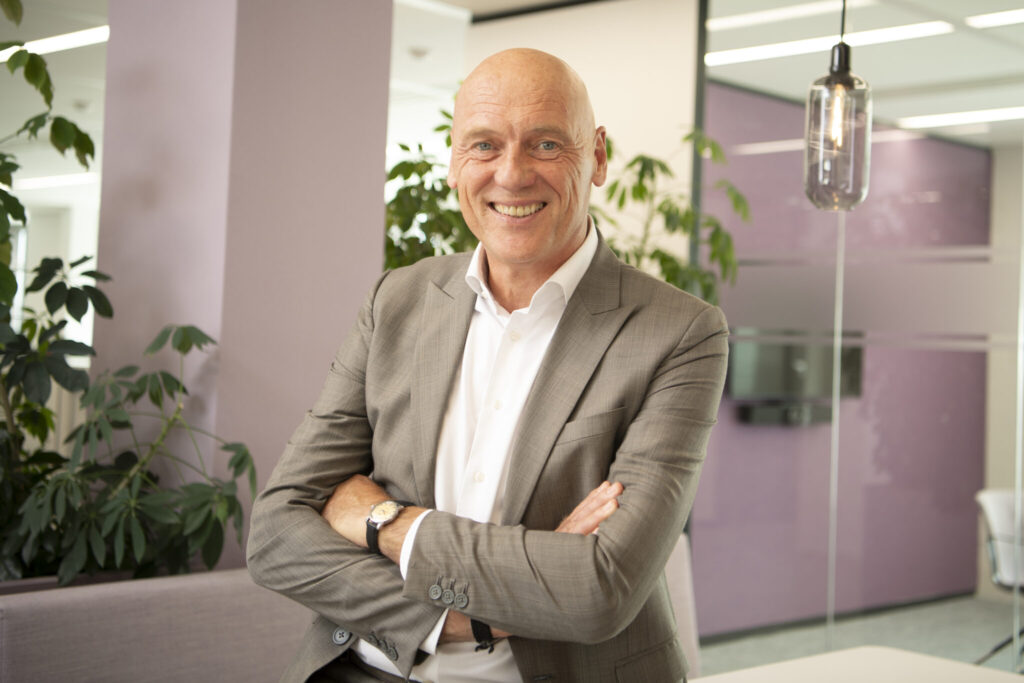
The acceleration team for priority 4 of the NDS, Prioritising citizens and entrepreneurs in service delivery, led by Hans Ouwehand, is working towards a fundamentally different approach. “If we want to restore trust, the government must collaborate much better and get services right the first time,” says Ouwehand. He chairs the CAK (healthcare administration) board and has been active in public service for years. From his daily practice, he sees where things go wrong. Individual interactions with government often go smoothly, but as soon as citizens depend on multiple organisations, friction arises. “When vulnerable citizens have to deal with several government bodies, we lose track. The overview vanishes, and nobody feels accountable for the whole.”
Designing services from the citizen’s perspective
The core of this priority is that the government designs services based on the real lives of citizens and businesses. Not from systems, organisations, or legal responsibilities, but from what people actually need. Ouwehand emphasises this requires a different mindset. “In the past, we overemphasised self-reliance. But we mustn’t now swing to the other extreme and assume no one is self-reliant. The truth lies somewhere in between.”
For most people, digital self-service works well. Many issues can be sorted out without direct contact with the government. At the same time, a group of citizens and businesses requires support. “These people must not be left to navigate forms, waiting times, and counters alone. This is where government must make a difference.”
Always at the right door
The acceleration team has intentionally chosen to approach these challenges from the perspective of citizens and entrepreneurs. Ouwehand believes it’s vital to reverse the usual order. Don’t start with portfolios or internal structures, but by how citizens and businesses perceive contact. “In my view, the starting point is 1 counter. Or as it’s often called: always being at the right door. It shouldn’t matter which door people knock.”
This doesn’t mean creating a single central counter for everything, but it does mean that the government as a whole takes responsibility for resolving issues. Digital portals and contact points must interconnect logically. Signals from citizens and businesses form the basis for improvement. “The signalling function starts there. What bottlenecks do people experience, and what do these reveal about our processes?”
Proactive service in practice
A key aspect of this priority is proactive service. Instead of waiting for signals or for people to apply on their own, it involves actively helping when it’s clear someone needs support or is entitled to it. Ouwehand provides a practical example of collaboration among the CAK, municipalities, and the UWV (agency for employee insurance). “People who can’t pay their healthcare premiums are often pushed further into debt. If we do nothing, we make the problem worse.”
In Rotterdam, they explored new approaches. The UWV detects when individuals with a Wajong benefit are missing out on allowances. Instead of waiting for them to come forward, staff proactively contact them. “They don’t say, ‘You’ll have to apply.’ They say, ‘You’re leaving money on the table. Can I help you?” People are then directly connected to the CAK and their health insurer, so they can pay their insurance premiums without incurring administrative penalties. “That’s proactive service. People get help before they get stuck.”
These kinds of initiatives already existed, but the acceleration team has given them extra attention. “We adopt these examples and speed them up. Every municipality wants this.”
Data sharing as a prerequisite
Collaboration and proactive service are impossible without data sharing between organisations. Ouwehand considers this one of the biggest obstacles. “If you don’t know what’s going on with each other, you can’t work together. Privacy is valuable, but sometimes we say, ‘For your privacy, we can’t help you.’ That doesn’t sit right.” Where data can be shared, it should be maximised, he believes. And where legislation unnecessarily obstructs progress, it should be amended. “Without data sharing, government remains fragmented. That’s not in the interest of citizens or businesses. We’re not solving problems structurally.”
That’s why ‘resolving data bottlenecks’ is also included as an accelerator in the NDS priority on Data. This priority doesn’t stand alone. Good service requires data, standardisation, and responsible use of AI. Ouwehand sees AI as an important driver. “With AI, you can redesign and better align processes. But it must be done responsibly.” Here too, standards and sharing good examples are essential. “You need to know what’s possible and what’s not yet wise.”
The path of persuasion
A second obstacle is the crowded change agendas of government organisations. Legislation, maintenance, and major ICT programmes are covered by existing portfolios. “You can demand everyone make room, but that’s not how it works. Reality is stubborn.”
That’s why the acceleration team has chosen the path of persuasion. Not forcing it on people, but demonstrating what works. “We gather good examples and highlight them. This way, organisations can learn from each other. We also offer ‘Fieldlabs’ environments to collaboratively develop new examples. And often, there turns out to be more room than initially believed.
Cultural change is underway
Ouwehand believes the culture within government is already shifting. The realisation that services must fit citizens is widespread. The challenge lies mainly in implementation. “It’s not unwillingness. It’s powerlessness. People are trapped in rules, systems, and agendas.”
Yet he sees hopeful signs. Examples show it’s possible to turn processes around. Not making citizens apply, but having the government signal and act. “Fortunately, this way of thinking is really changing.”
From organising to delivering
Over the past months, the focus has been on organising the acceleration team and developing the NDS accelerators (in substantive ‘tow-pagers’). “This may sound internal, but it’s an important step to determine what needs to happen to achieve the NDS goals. Now we can talk about content instead of governance.”
In the coming period, the field will be actively involved. National government, municipalities, implementing organisations, provinces, and water authorities will all contribute to the development. At the same time, the acceleration team wants to continue with clear ‘no-brainers’. “We don’t have to wait for everything to be aligned before taking steps. We’ll get started and adjust as we go.”
How will this affect citizens and entrepreneurs?
Citizens and entrepreneurs should be noticing tangible improvements. Fewer lapses between organisations, quicker assistance, and earlier support. “People must feel that government isn’t leading them further into the swamp, but is actually easing their burden.”
Ouwehand hopes that signals from citizens will be systematically addressed and transformed into improved services. Initiatives centred on life events can be useful. “Don’t invent things for people, but let them emerge with or through them.”
Collaboration the new normal
In a year and a half, Ouwehand aims to be able to say that collaboration between (government) organisations has become more natural and that people find each other more quickly and pick up signals directly. “This starts internally, but the effect must be visible on the outside.”
His final message is clear. We must work together. Citizens don’t see a difference between organisations, whether they are public or private. They simply seek help. If we base everything on that, we can truly make an impact.


