EUDI Wallet certification
Establishing trust in the EUDI Wallet requires more than proving it works. All connecting processes must provide a high level of assurance and resilience.
For Caribbean and international professionals working on government digitalisation

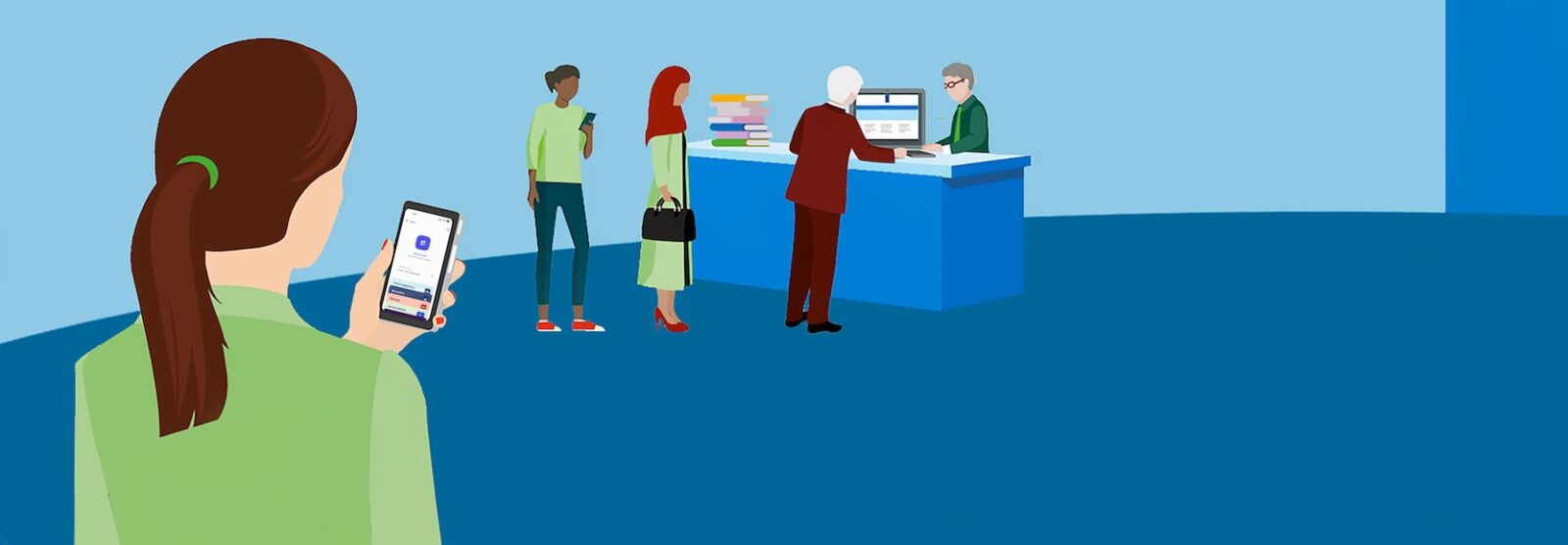
Whether you’re hiring a car, applying for benefits, or purchasing insurance, you often need to supply various pieces of information and supporting documents. These procedures can be time-consuming and require collecting documents from different sources. In future, they will be quicker, more secure, and better for your privacy.
The legal basis for this is the eIDAS Regulation. Revised in May 2024, the eIDAS Regulation plays a key role in Europe’s digital transformation. It builds on existing digital identity technologies while introducing higher standards for usability, security and reliability. Under this regulation, citizens can access online services and share data digitally through an EU Digital Identity wallet, or EUDI wallet, known in the Netherlands as the EDI-wallet.
Many questions remain about using the EUDI Wallet. Below are the questions most frequently asked on the Digital Government website.
Citizens can store various types of personal information from the Personal Records Database (BRP) in their EUDI Wallet, including their name, date of birth, qualifications and permits. They can choose to add this information to their wallet app in the form of digital cards. They can also use their wallet to create electronic signatures.
EUDI Wallets do not replace existing national digital identification systems, such as DigiD. Using an EUDI Wallet is entirely voluntary. It simply gives citizens an additional option, with a range of new possibilities:
No. Using an EUDI Wallet is entirely voluntary. Citizens are free to choose whether or not to use one. Existing identification methods, such as DigiD, will remain available.
Under the eIDAS Regulation, every EU Member State must issue, designate or recognise at least one EUDI Wallet by the end of 2026. The public EUDI Wallet is currently being developed, and the necessary national legislation is being prepared. Preparations for its implementation are also underway, although some European specifications are still being finalised.
In the Netherlands, EUDI Wallets can be used once the Dutch House of Representatives has adopted the legislation implementing the eIDAS Regulation and that legislation has entered into force. The implementing legislation is expected to be submitted for consultation towards the end of 2026.
Public service providers and designated private organisations will only be required to accept EUDI Wallets that meet all the requirements of the European Digital Identity framework, have been certified accordingly, and have been issued or recognised by an EU Member State.
The European Commission is still developing the technical specifications and certification arrangements through implementing acts. As a result, EUDI Wallets are expected to become available later than originally anticipated.
Not just anyone can offer an EUDI Wallet. Providers must meet the strict requirements set out in the eIDAS Regulation, and their wallets must be certified before they can be recognised as EUDI Wallets.
The Netherlands is developing its own public EUDI Wallet: the NL Wallet. Other providers may also enter the market with their own certified EUDI wallets in the future.
The Netherlands has deliberately opted for an open approach that allows multiple EUDI Wallets to operate alongside one another. This means that users will be free to choose which EUDI Wallet they want to use.
Data minimisation is a key principle of EUDI Wallets. Service providers may only request the personal data they actually need to provide their service.
For example, if a service provider only needs to know where someone lives, the user can share their place of residence without disclosing their full address. This allows users to share only the information necessary for a particular service, in a secure and reliable way.
Users remain in control of their own data and never have to share more information than is necessary.
A wallet is a digital equivalent of a physical wallet: a place to store things such as bank cards, access passes and flight tickets.
An ID wallet is a digital wallet that stores personal identification data, such as a person’s first and last name and date of birth. It allows users to identify themselves online and share personal information. The provider of the ID wallet determines how the user’s identity is verified.
An EUDI Wallet (in Dutch: EDI) is short for European Digital Identity wallet. An EU Member State recognises it as an ID wallet. It contains personal identification data and must meet the requirements of the eIDAS Regulation. Once an ID wallet has been certified as meeting these requirements and recognised by an EU Member State, it qualifies as an EUDI Wallet.
In short, all EUDI Wallets are ID wallets, but not all ID wallets are EUDI Wallets.
For the purposes of this Q&A, we use the term EUDI Wallet(s).
The European Commission has also created a comprehensive FAQs page. In addition, you can find a full list of frequently asked questions on the EDI Wallet Pleio platform (in Dutch).
Still can’t find the answer to your question? Feel free to submit your question via edi@minbzk.nl.
An EUDI wallet is a digital solution that enables secure online identification and data exchange across Europe. It provides secure access to online services offered by public and private organisations by sharing digital credentials. Users can store various personal details in their EUDI wallet, such as personal data from the Dutch Personal Records Database (BRP), including name and date of birth, as well as other information such as address, diplomas, or permits. Compared with existing login methods, an EUDI wallet lets users share specific data rather than all their information. Users can also see exactly which data they have shared, with whom, and for what purpose. The EUDI wallet also enables digital document signing.
Using the EUDI Wallet is optional. If you prefer not to use it or are unable to, you can still access existing services from governments and other providers through traditional methods. The EUDI Wallet is an additional option and is not intended to replace current choices.
By using the wallet, you retain control over your personal data. You decide which data to store, when to use it, and with whom to share it. This means you don’t have to share more information than necessary. The principle is data minimisation: you share only what is required. For example, you can share only whether someone is over 18. You can disclose only that (the wallet indicates whether you are over 18). You then do not need to provide your date of birth.
The wallet also offers convenience: Processes that currently require physical documents will become available digitally. Many of these applications are being tested at a European level through large-scale pilot projects (LSPs) (Dutch). These pilots explore various use cases, such as digitally signing contracts with a qualified signature, renting a car with a digital driving licence, or proving professional qualifications with a digital certificate. The final usage possibilities of the EUDI wallet will depend on the services that market parties choose to offer.
For service providers, EUDI wallets make it easier to verify customers’ identities and deliver services. They can reduce administrative work, receive reliable information directly from official sources, and minimise errors.
Under the revised eIDAS Regulation, every EU Member State must make at least one certified EUDI wallet available by the end of 2026. Member States must provide this wallet free of charge to citizens. The Dutch government is developing a national version: the NL Wallet. It is currently under development and will become available once the necessary national implementing legislation has been adopted. The NL Wallet is being designed as an accessible and trustworthy digital solution for all. Ease of use, accessibility, privacy and security are at the heart of its development.
For more details on the EUDI wallet’s development in the Netherlands, the Dutch EDI system or on NL Wallet, visit edi.pleio.nl (Dutch).
If you have any questions or suggestions, feel free to contact edi@minbzk.nl.
Establishing trust in the EUDI Wallet requires more than proving it works. All connecting processes must provide a high level of assurance and resilience.
News - 18 September 2026
The Netherlands is working with multiple countries to certify EUDI wallets, including OWASP MAS, a globally recognised standard for app security certification.
If you're working on digitalising the government and got something on your mind, please share your thoughts with us.


